InSinkErator Badger 1 vs Badger 5: Which Is Better? (October 2026)
In the InSinkErator Badger 1 vs 5 comparison, choose the Badger 5 for regular home cooking and the Badger 1 for light cleanup. The Badger 5 offers more motor power and longer warranty coverage.
On this page (11 sections)
- InSinkErator Badger 1 vs 5: what actually changes?
- Which Badger fits the way you cook?
- When should you skip both models?
- Will either disposal fit beneath your sink?
- Does an existing InSinkErator mount make replacement easier?
- Does the included power cord suit your kitchen?
- What should you check during installation?
- How should you feed scraps into either Badger?
- Which care habits prevent avoidable problems?
- When is the Badger 5XP the better step up?
- What should decide your InSinkErator Badger 1 vs 5 choice?
Choose the Badger 5 for regular home cooking and the Badger 1 for light cleanup. In the InSinkErator Badger 1 vs 5 comparison, the Badger 5 is the stronger default because it combines more motor power with longer service coverage.
The Badger 1 makes sense when you cook occasionally, scrape most waste into the trash or compost, and use the sink disposal for small leftovers. Choose around those habits first, then check whether the unit fits your plumbing and electrical connection.

InSinkErator Badger 1 vs 5: what actually changes?
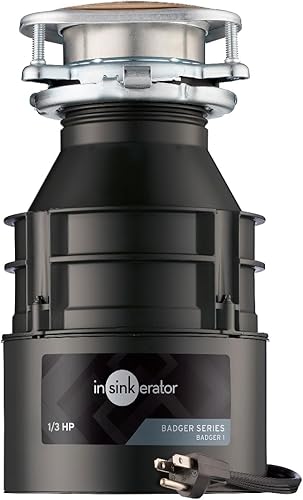
The main differences are motor power and warranty length. The Badger 1 has a 1/3 HP Dura-Drive induction motor and a 1-year limited service warranty; the Badger 5 has a 1/2 HP Dura-Drive induction motor and a 3-year in-home service warranty.
Both use galvanized steel grind components, so the Badger 5 doesn't give you a change to stainless steel inside the grinding chamber. Its main reason to buy is the stronger motor paired with longer coverage.
The Badger 1 has a single grind stage. That describes its grinding arrangement, not permission to feed it anything that fits through the sink opening.
Horsepower helps you choose a motor for your routine, but it isn't a measured comparison of speed, noise or jam frequency. Choose the Badger 5 for its higher rating without assuming it will finish every load faster or run more quietly.
Neither choice removes the need to scrape plates and feed scraps gradually. A disposal handles small food remnants during cleanup; it shouldn't become the main route for emptying a full plate or clearing vegetable peelings from a large meal.
Which Badger fits the way you cook?
The Badger 1 suits occasional use, while the Badger 5 is the better fit for a sink that gets regular meal-prep scraps. How often you cook matters more than the number of people at the table.
A single person preparing several meals daily may use a disposal more than a larger household that rarely cooks. Think about what reaches your sink over a normal week.
Badger 1 vs Badger 5 for light kitchen use
Choose the Badger 1 if your routine is mostly rinsing dishes after you've removed the bulk of the food. Small amounts of suitable scraps are a better match than repeated loads during a long cooking session.
It's also a reasonable replacement when your previous disposal met your needs and you're not trying to increase how much food goes through it. Keep the decision tied to actual use rather than choosing a larger motor by habit.
Skip the Badger 1 if you already know you want more motor power for regular cooking. Buying the entry model while planning to lean on it heavily is a poor match between the appliance and your routine.
Badger 5 for regular meal preparation
Choose the Badger 5 if you cook most days and want the stronger option in this pair. Its longer service coverage is another reason to favor it when you're already paying for installation.
It suits a kitchen where small scraps reach the sink during both preparation and dishwashing. You still need to clear bulk waste from cutting boards and plates before rinsing.
Skip it if your real goal is stainless steel grind components or a quieter kitchen. The first requires a different model, and the supplied specifications don't establish a noise advantage over the Badger 1.
When should you skip both models?
Skip both if you're trying to solve poor drainage, unsuitable waste habits or an unconfirmed fit by changing the disposal. A stronger motor won't repair a blocked drain or make grease safe for plumbing.
If your sink already drains slowly, address that before fitting a replacement. Otherwise, you may install a working disposal and still have the same standing water problem.
Neither model is the right choice if your plan is to grind large amounts of fibrous vegetable waste or send cooking fat down the drain. Put those materials in the appropriate waste container instead.
For a septic system, InSinkErator describes both models as suitable for properly maintained systems. That doesn't mean your particular system can accept unlimited food waste, so check its care requirements before making disposal use part of your routine.
If noise is your main complaint, choose by documented sound-control features rather than horsepower alone. A motor upgrade and a noise-focused upgrade are separate buying decisions.
Will either disposal fit beneath your sink?
Both have compact designs, but fit depends on the drain outlet, mount and nearby plumbing as well as the outer dimensions. Measure the actual installation area before ordering.
The Badger 5 measures 6.31 x 6.31 x 11.5 inches. The supplied Badger 1 measurements conflict, so confirm its installation drawing for the exact version rather than planning around a single dimension here.
Start by measuring from the underside of the sink to the cabinet floor. Then check the space around the trap, dishwasher hose, water lines and any under-sink filter.
The drain connection deserves special attention. A disposal body can fit inside the cabinet while its outlet sits in the wrong position for the existing trap.
Leave room to reach service points and remove the unit later. A crowded cabinet that barely holds the disposal can turn a minor repair into a much larger job.
Our guide to garbage disposal replacement checks explains which measurements and connections to inspect first. Take photos of your current setup so you can compare the plumbing route with the new unit's installation diagram.
Does an existing InSinkErator mount make replacement easier?
A compatible existing mount can reduce replacement work, but inspect it before deciding to reuse it. Brand compatibility doesn't confirm that an old flange, seal or mounting assembly is still in good condition.
The Badger 1 has a Quick Lock mount, and the Badger 5 is designed to fit existing InSinkErator hardware. Both have Lift and Latch technology to help with the sink connection during installation.
Those features help with mounting the disposal; they don't handle every connection beneath the sink. You still need to align the discharge plumbing and secure any dishwasher connection correctly.
Both packages include a stopper, discharge tube, flange, gasket, hardware and jam-buster wrench. Keep the instructions and wrench somewhere accessible after installation rather than leaving them behind stored cleaning supplies.
If the old sink flange leaks or the mount shows damage, replace the affected parts as instructed. Reusing questionable hardware can erase the convenience of choosing a compatible disposal.
Does the included power cord suit your kitchen?
These versions include a factory-installed power cord, which suits a kitchen with the correct outlet arrangement. Check your existing connection before treating the included cord as a complete electrical solution.
Look beneath the sink to see whether the current unit plugs into an outlet or has wiring connected directly to it. Also identify how power is controlled, such as a wall switch or an existing disposal control.
Confirm that the cord can reach the suitable outlet without an extension cord. Keep the electrical connection clear of leaks and follow the unit's installation instructions.
For a hardwired setup, ask a qualified electrician to confirm the correct approach before ordering. Don't assume you can simply swap connection methods because the disposal fits the sink.
Read our guide to garbage disposal power cords and wiring choices for help identifying the setup. For a broader comparison of disposal types and kitchen needs, use the garbage disposal buying guide.
What should you check during installation?
Start with power disconnected and the replacement instructions open. The main checks are a secure mount, correct drain connections, proper dishwasher preparation and no leaks.
Support the old unit before releasing its mounting connection. Have a container and towels ready for water remaining in the discharge tube and trap.
If you're connecting a dishwasher, follow the instructions for preparing the disposal's dishwasher inlet. Remove the inlet knockout when required and retrieve the loose piece before connecting the hose.
Check the discharge tube and trap alignment before tightening everything. Don't force pipes into position or use the mounting connection to pull misaligned plumbing together.
Once installation is complete, check the mount and run water through the sink while inspecting the connections. Check again while draining a filled sink and, if connected, during dishwasher discharge.
Only restore power and operate the disposal when the installation is complete and the area is dry. Our step-by-step garbage disposal installation guide covers the sequence in more detail.
How should you feed scraps into either Badger?
Use cold water and small amounts of suitable scraps. Both models are continuous-feed disposals, so you control the amount entering while the motor runs.
Turn on cold water, start the disposal and add scraps gradually. Let the chamber clear before adding more rather than filling the opening and switching it on afterward.
Keep water flowing while grinding and briefly afterward, following InSinkErator's instructions. Water carries ground particles through the drain; the motor alone doesn't move them through the plumbing.
Scrape plates first and break up the cleanup from a large meal. Several small additions are a better habit than packing the chamber with everything at once.
Keep fingers, utensils and loose objects away from the opening during use. If something falls inside, disconnect power before retrieving it with a suitable tool.
A humming motor without grinding is a reason to stop. Don't repeatedly cycle the switch or keep adding scraps, since that won't remove a physical obstruction.
Which care habits prevent avoidable problems?
The most useful habits are keeping unsuitable waste out and cleaning reachable surfaces safely. Routine care matters with either model, regardless of motor size.
Keep grease, oil, shells, hard pits and nonfood objects out of the disposal. Put stringy or fibrous waste in the trash or compost rather than relying on extra horsepower to handle it.
Avoid sending large amounts of rice, pasta or similar food down the drain. A disposal can reduce particle size without making a heavy food load suitable for your drain.
For cleaning, disconnect power and follow the instructions for the sink opening and splash guard. Food residue around those surfaces can contribute to odors even when the chamber has cleared.
Don't pour drain chemicals into a disposal unless the instructions specifically allow the product. If the sink drains poorly, deal with the blockage rather than masking the symptom with repeated cleaning.
See how to clean a garbage disposal for a fuller care routine. Keep the jam-buster wrench with the appliance instructions so you can find it when needed.
When is the Badger 5XP the better step up?
Consider the Badger 5XP when frequent meal prep and stainless steel grind components justify moving beyond this pair. It has a 3/4 HP Dura-Drive induction motor, and InSinkErator backs it with a 4-year limited service warranty.
Its body is 12.63 inches tall and 6.31 inches wide, so check vertical clearance and drain alignment carefully. Don't assume that a kitchen fitted for a smaller Badger has enough room for this version.
The 5XP also includes a factory-installed power cord and uses a single grind stage. It remains a disposal for everyday scraps, with the same need for sensible feeding and drain care.
Skip this upgrade if you only rinse a few dishes and rarely use the disposal. Its stronger motor doesn't add much practical value when almost all your food waste already goes elsewhere.
Read our Badger 5XP review for a closer look. If you're considering a wider change, compare InSinkErator Power and Badger Series disposals before committing to another Badger.
What should decide your InSinkErator Badger 1 vs 5 choice?
Make the InSinkErator Badger 1 vs 5 decision around your cleanup routine and installation plan. Pick the Badger 1 for occasional small scraps, the Badger 5 for regular cooking, or the 5XP when you specifically want the stronger motor and stainless steel grind components.
Before ordering, settle the 3 checks that can change the job: cabinet clearance, drain alignment and electrical connection. Give an installer the exact model details if you're hiring someone, especially when the existing setup needs plumbing or wiring changes.
Choose the model you'll use properly rather than buying extra power to accommodate poor disposal habits. For alternatives beyond these 3, our InSinkErator garbage disposal guide is the next useful comparison.
Frequently asked questions
Is the Badger 5 better than the Badger 1?
The Badger 5 is the better choice for regular home cooking because it pairs a higher motor rating with longer service coverage. The Badger 1 still suits light cleanup after plates are scraped.
Neither model should be used to dispose of large meals, grease or unsuitable scraps.
Do the Badger 1 and Badger 5 have the same size?
Don't assume they're interchangeable based on their compact shape. The Badger 5 measures 6.31 x 6.31 x 11.5 inches, while the Badger 1's supplied measurements conflict.
Confirm the exact model's installation drawing, including outlet position, before buying, and leave access to the plumbing and service points.
Do the Badger 1 and Badger 5 come with a power cord?
These versions both include a factory-installed power cord. Check that your kitchen has a suitable switched outlet and that the cord can reach it without an extension cord.
If the existing disposal is hardwired, have a qualified electrician confirm the correct connection method before you order.
What is the difference between the Badger 5 and Badger 5XP?
The Badger 5XP adds a 3/4 HP motor, stainless steel grind components and a 4-year limited service warranty. The Badger 5 has a 1/2 HP motor, galvanized steel grind components and a 3-year in-home service warranty.
The 5XP also needs more vertical space beneath the sink.
Can the Badger 1 handle everyday food scraps?
Yes, the Badger 1 is designed for everyday food scraps and suits small amounts left after scraping plates. Feed suitable scraps gradually with cold water running, and follow InSinkErator's instructions.
Large loads, grease, fibrous waste and hard objects are reasons to change your disposal habits, not just the motor size.


