6 Best Garbage Disposals for Septic Systems (October 2026)
The best garbage disposals for septic systems include the InSinkErator Badger 5 with Power Cord for straightforward replacements, the InSinkErator Evolution 3/4 HP for open kitchens, and the InSinkErator Badger 5XP with Power Cord for narrow cabinets.
On this page (8 sections)
- Which is the best garbage disposal for septic system use?
- Does a septic system need a special garbage disposal?
- How should you choose motor power and grinding features?
- What should you check before installation?
- How should you use a garbage disposal with a septic tank?
- What care keeps the disposer useful without neglecting the tank?
- Which mistakes should septic-system buyers avoid?
- Which garbage disposal is the best choice for your septic system?
The InSinkErator Badger 5 with Power Cord is the best garbage disposal for septic system use for a basic, compact replacement. Choose it for modest everyday scraps after confirming that your septic system can accept a disposer.
For an open kitchen, the Evolution 3/4 HP adds sound control and finer grinding. Choose Evolution Septic Guard specifically for its included BOOST liquid-dispensing accessory, with space and upkeep planned before installation.
Septic suitability comes first. A motor can break scraps into smaller pieces, but those pieces still enter your wastewater and add to the tank’s load.
Read whether you can use a garbage disposal with a septic tank before adding one. Our 1/2 HP and 3/4 HP comparison and garbage disposal size guide help with the next decision.
Our picks at a glance
-
1
 Best for straightforward replacements
InSinkErator Badger 5 with Power Cord
9.2/10 our score
See it on Amazon -
2

-
3

- 4
 Check it
InSinkErator Evolution Septic Guard 3/4 HP
Best for septic accessory buyers - 5
 Check it
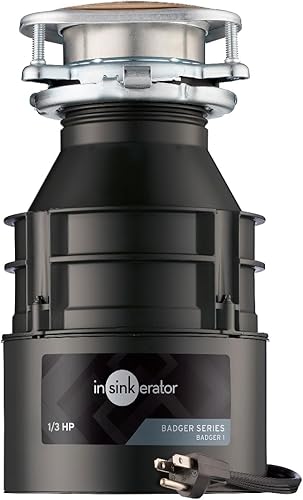
InSinkErator Badger 1 with Power Cord
Best for occasional use - 6
 Check it
InSinkErator Power Series 3/4 HP
Best for regular home cooks
Which is the best garbage disposal for septic system use?
The Badger 5 suits the most straightforward replacement job: modest scraps, limited cabinet space and an existing outlet setup. Move to another model when it solves a specific problem, such as noise, frequent cooking or a need for more motor power.
LightChores compared grind systems, cabinet fit, electrical connections and septic-related features. The scores reflect those features and their usefulness for the intended buyer.
All 6 choices are InSinkErator models, and their septic suitability depends on a properly maintained system. This is a comparison within that group, not evidence that every septic household should install a disposer.
Use the table to eliminate poor fits before comparing extras. A narrow body, the right power connection and workable drain alignment can matter more than another grinding stage.
| Product | Best for | Horsepower | Grind components | Power connection | Our score |
|---|---|---|---|---|---|
| InSinkErator Badger 5 with Power Cord | straightforward replacements | 1/2 HP | Galvanized steel | Factory-installed cord | 9.2 |
| InSinkErator Evolution 3/4 HP | open kitchens | 3/4 HP | Stainless steel | Hardwire adapter included; cord separate | 8.9 |
| InSinkErator Badger 5XP with Power Cord | narrow cabinets | 3/4 HP | Stainless steel | Factory-installed cord | 8.7 |
| InSinkErator Evolution Septic Guard 3/4 HP | septic accessory buyers | 3/4 HP | Stainless steel | Hardwire adapter included; cord separate | 8.4 |
| InSinkErator Badger 1 with Power Cord | occasional use | 1/3 HP | Galvanized steel | Factory-installed cord | 8.4 |
| InSinkErator Power Series 3/4 HP | regular home cooks | 3/4 HP | Stainless steel | Hardwire adapter included; cord separate | 8.1 |
InSinkErator Badger 5 with Power Cord: Best for straightforward replacements
- 1/2 HP motor
- Factory-installed power cord
- Compact design
- Galvanized steel grind components
Choose this basic corded model for modest everyday scraps and compatible InSinkErator replacements. Its narrow body suits crowded cabinets, while buyers seeking sound control should consider Evolution.
Pros
- Factory-installed power cord
- Fits compatible existing InSinkErator hardware
- Compact body
Cons
- Less motor power than the 3/4 HP options
- Galvanized rather than stainless steel grind components
Why choose the Badger 5 garbage disposal for a septic system?
Choose the Badger 5 for routine plate cleanup and a compatible replacement. Its 1/2 HP motor fits a household that removes most food first and uses the sink for small remaining scraps.
The body is 6.31 inches wide and 11.5 inches tall. That narrow shape is useful when pipes or stored items crowd the cabinet, though you still need room around the connections.
Its factory-installed cord avoids a separate cord purchase for a suitable outlet setup. Compatible existing InSinkErator mounting hardware can also simplify replacement, but inspect its condition before reuse.
The galvanized steel grind components keep this a basic option beside the stainless steel models below. InSinkErator provides a 3-year in-home service warranty.
Skip it if noise is your main complaint or you specifically want multi-stage grinding. For the work a replacement involves, read our step-by-step garbage disposal installation guide.
InSinkErator Evolution 3/4 HP: Best for open kitchens
- 3/4 HP motor
- Three-stage MultiGrind
- Quiet SoundSeal technology
- Removable Quiet Collar baffle
Choose Evolution when cleanup happens beside conversation or television. It combines SoundSeal sound control with three-stage grinding, but needs more cabinet width than the Badger models.
Pros
- Three-stage MultiGrind
- Quiet SoundSeal technology
- Removable baffle for cleaning
Cons
- EZ Connect power cord sold separately
- Wider than the Badger models here
Choose Evolution when cleanup overlaps with conversation or television. InSinkErator says Quiet SoundSeal makes it quieter than standard disposals, making sound control a clear reason to choose it over a basic Badger.
Its three-stage MultiGrind system is designed to grind tough scraps finer and help prevent clogs. Buy that feature for processing at the sink, while continuing to keep most food out of the septic system.
The removable Quiet Collar baffle gives access to a part where food residue collects. That matters if your current splash guard is awkward to clean and sink odor is a recurring chore.
Allow for a body 8.25 inches wide and 12.25 inches tall, plus plumbing and service access. The included EZ Connect hardwire adapter supports hardwired installation; a plug-in setup needs the separately sold compatible cord.
Skip Evolution if cabinet width or a simple corded swap decides the purchase. Choose it when you will benefit from its sound control and grind design during regular cleanup.
InSinkErator Badger 5XP with Power Cord: Best for narrow cabinets
- 3/4 HP motor
- Factory-installed power cord
- Single-stage grind
- Stainless steel grind components
A stronger-motor choice for regular cleanup where cabinet width is limited. It keeps the basic Badger layout and included cord, with more height than the Badger 5.
Pros
- Factory-installed power cord
- Narrow 6.31-inch body
- Stainless steel grind components
Cons
- Single-stage grind
- Taller than the Badger 5
Choose the Badger 5XP for a stronger motor in a narrow cabinet. It suits regular meal cleanup when the basic Badger layout fits your space and you want to keep an included cord.
Its 3/4 HP motor and stainless steel grind components distinguish it from the Badger 5. However, its single-stage grind means it is not the substitute for Evolution if extra grinding stages are your priority.
The body is 6.31 inches wide and 12.63 inches tall. Check the extra height beneath a deep sink, and compare the discharge position with your existing drain before assuming it will be a direct swap.
Quick Lock supports compatible InSinkErator replacements, while Lift and Latch helps with mounting. InSinkErator backs the disposer with a 4-year limited in-home service warranty.
Skip it when sound reduction is the main reason for replacing your current unit. Its strongest fit is the buyer who wants more motor power without moving to a wider disposer.
InSinkErator Evolution Septic Guard 3/4 HP: Best for septic accessory buyers
- 3/4 HP motor
- BOOST accessory
- Septic Guard liquid
- Quiet SoundSeal technology
Choose this package specifically for BOOST and its liquid-dispensing routine. InSinkErator says Septic Guard liquid supports solids digestion in properly maintained systems; allow space for the accessory and access for refills.
Pros
- BOOST accessory and Septic Guard liquid included
- Quiet SoundSeal technology
- 9-year limited disposer warranty
Cons
- EZ Connect power cord sold separately
- Accessory needs additional space and liquid replenishment
Choose Evolution Septic Guard for BOOST and its scheduled liquid dispensing, after discussing treatment products with your septic professional. InSinkErator says Septic Guard liquid supports solids digestion and helps break down food waste buildup in properly maintained systems.
BOOST dispenses liquid every 12 hours. InSinkErator says a bottle lasts up to 3 months when the accessory uses batteries or a wall adapter connected to constant power.
Plan for the accessory’s 7.82-by-4-inch size and its connection through the dishwasher inlet adapter. Leave access for refills rather than fitting it behind plumbing you would need to disconnect.
The disposer includes Quiet SoundSeal and stainless steel grind components. Its hardwire adapter is included, while the compatible power cord is separate.
InSinkErator provides a 9-year limited disposer warranty and separate 1-year limited accessory coverage. Confirm installation clearance before ordering because the supplied height figures differ.
Skip this package if you want no refill routine or your septic professional advises against treatment products. Buy it for the accessory, not as a repair for an overloaded tank.
InSinkErator Badger 1 with Power Cord: Best for occasional use
- 1/3 HP motor
- Factory-installed power cord
- Single-stage grind
- Galvanized steel grind components
A basic option for households that scrape plates thoroughly and use the disposer only occasionally. Frequent cooks should consider the stronger motors above before choosing this entry-level model.
Pros
- Factory-installed power cord
- Compact design
- Quick Lock mount for compatible replacements
Cons
- Lowest horsepower in this group
- 1-year limited service warranty
Choose the Badger 1 for occasional light cleanup after thorough scraping. It makes sense in a kitchen where the disposer catches small leftovers rather than handling frequent meal-preparation waste.
Its 1/3 HP motor is the smallest in this group. The single-stage grind and galvanized steel grind components suit that basic role, but regular cooks have stronger options above.
The factory-installed cord helps with an outlet installation. Quick Lock and Lift and Latch also support compatible replacements, though the flange, drain connections and electrical setup still need checking.
Confirm dimensions before choosing it for a tight space, especially beneath a deep sink. A compact design does not establish whether the outlet lines up with your plumbing.
InSinkErator provides a 1-year limited in-home service warranty. Compare that shorter coverage with the other Badgers before deciding.
Skip the Badger 1 if you cook often or want extra grinding features. A smaller motor does not protect the septic tank; the amount and type of waste entering it matter more.
InSinkErator Power Series 3/4 HP: Best for regular home cooks
- 3/4 HP motor
- Two-stage MultiGrind
- Removable baffle
- Reduced sound compared with standard disposals
Choose Power Series for regular meal cleanup when you want two-stage grinding and a removable baffle. Compare its connection requirements with the corded Badgers and its sound features with Evolution.
Pros
- Two-stage MultiGrind
- Removable baffle for cleaning
- 6-year limited service warranty
Cons
- EZ Connect power cord sold separately
- Wider than the Badger models here
Choose Power Series for regular cooking and two-stage grinding. Its MultiGrind system is designed to process scraps finer than the Standard Series and help prevent clogs.
The stainless steel grind components and removable baffle give it a different feature mix from the basic Badgers. InSinkErator also describes reduced noise compared with standard disposals.
Its body measures 8.25 inches wide and 12 inches tall. Check side clearance if your cabinet contains filters, pullout bins or other equipment that could block installation or later service.
An EZ Connect hardwire adapter comes with it, and the compatible cord is sold separately. InSinkErator provides a 6-year limited service warranty.
This is a useful middle choice when you want more grinding stages without the Septic Guard accessory. Compare it with Evolution if sound control is a main reason for upgrading.
Skip it if your installation needs a narrow Badger body or you only need occasional light cleanup. Choose by the features you will use, rather than motor size alone.
Does a septic system need a special garbage disposal?
A dedicated septic accessory is not required by InSinkErator’s suitability statements for the other models here. Your system’s condition, capacity and local requirements come before the disposer’s name.
Grinding reduces particle size without removing food from the wastewater. Some material settles in the tank, so a disposer can increase the solids your maintenance routine must account for.
Before adding one, tell your septic professional how many people live in the home and how often you cook. Ask whether the system can accept a disposer and whether inspections or pumping should change.
Mention previous backups, slow drains or drain-field problems. If several fixtures drain poorly or sewage odors appear, resolve the cause before adding equipment.
The EPA’s septic care guidance recommends limiting garbage disposal use and keeping grease out of drains. A septic-compatible unit still calls for careful feeding and routine tank care.
If your current disposer works and the system is suitable, a replacement may offer little septic benefit. Better scraping habits can reduce food entering the tank without changing the appliance.
How should you choose motor power and grinding features?
Match the disposer to your normal cleanup routine, then choose extras that solve a real kitchen problem. More horsepower and finer grinding serve different purposes, and neither increases septic capacity.
Match power to the scraps left after scraping
Think about what remains after bones, peels and plate leftovers go into the trash or suitable compost. That smaller workload is the useful starting point for a septic household.
Occasional use favors a basic model, while frequent cooking can justify a stronger motor. Hosting one large dinner does not mean you need to size the disposer around processing all its waste.
For a closer comparison, read 1/2 HP vs 3/4 HP garbage disposals. Do not choose a small motor as a way to make an unsuitable septic system accept a disposer.
Choose grinding stages separately from horsepower
Extra grinding stages are worth considering when finer processing at the sink is a priority. A stronger single-stage model and a multi-stage model are different upgrades.
The Badger 5XP addresses motor power within a narrow body. Power Series and Evolution add multi-stage grinding, but their wider bodies may change the installation plan.
Even if a unit can process a tough scrap, you do not need to feed it one. Put large or troublesome food waste elsewhere to reduce both drain and septic loading.
Choose sound control for the room around the sink
Sound control matters most in an open kitchen where cleanup interrupts meals, calls or television. It has less value when the kitchen is separate and use is brief.
Compare features without assuming a sound-controlled unit will be silent. Also check for loose plumbing or mounting problems if the existing disposer has recently become louder, since replacement may not address every source of noise.
What should you check before installation?
Confirm cabinet clearance, drain alignment, mounting hardware and power before removing the old unit. A disposer can fit beneath the bowl yet still require plumbing or electrical changes.
Measure the body and the drain route
Measure from the sink’s mounting area, then check width around pipes and nearby equipment. Leave access to the reset button, mounting ring and plumbing connections.
Compare the discharge outlet with the wall drain and trap. The drain needs the correct slope; forcing a connection that sends wastewater uphill is not a workable fit.
A deeper replacement sink can reduce available room even when the cabinet is unchanged. Measure the present setup rather than relying on the dimensions of the old disposer alone.
Inspect the flange and mounting parts before reusing them. Our garbage disposal replacement checklist helps distinguish a compatible swap from a job needing extra plumbing work.
Identify the power connection before ordering
A factory-installed cord helps when you already have a suitable outlet. A hardwire adapter serves a different setup, and an old cord should not be assumed compatible with EZ Connect models.
Our garbage disposal power cord guide explains plug-in and hardwired arrangements. Include any needed cord or electrical work in your installation plan.
Identify switched and constant-power outlets separately, especially for an accessory with scheduled dispensing. Disconnect power before work and follow the unit’s wiring, grounding and strain-relief instructions.
Use a qualified electrician for wiring changes beyond your skills. A matching plug does not establish that the circuit or outlet arrangement is suitable.
Plan dishwasher drainage and leak checks
If the dishwasher drains through the disposer, follow instructions for opening the dishwasher inlet and securing the hose. A plug left in that inlet blocks the dishwasher’s drain path.
Support the disposer while mounting it, then check the flange, discharge joint and dishwasher connection for leaks. Recheck during dishwasher drainage if that connection is used.
For BOOST, plan the accessory and dishwasher-inlet arrangement together. Keep the refill area reachable after everything is connected.
How should you use a garbage disposal with a septic tank?
Scrape first, run cold water and feed small portions gradually. The disposer should handle leftover bits rather than become the main route for food waste.
Remove utensils and other objects from the sink opening before starting. Turn on cold water, start the disposer and add suitable scraps according to its instructions.
Let grinding finish before switching the unit off. Continue running water for the period specified in the instructions so processed waste clears the disposer and drain.
Keep grease, cooking oil and fat out of the sink. Hot water does not make grease suitable for pipes or a septic tank.
Put large batches of peels, rice, pasta and fibrous trimmings in the trash or suitable compost. A handful at a time is not permission to process an entire bowl of waste in repeated portions.
Keep coffee grounds, shells, bones, pits and nonfood objects out as a household rule. Some motors can process tough scraps, but sending those materials elsewhere reduces unnecessary loading.
Do not pack food into the opening before starting the motor. If scraps stop moving, stop adding more and switch off rather than trying to force them through.
Never reach into the disposer. Isolate power before following its obstruction-clearing instructions, and use the supplied tool only as directed.
What care keeps the disposer useful without neglecting the tank?
Clean sink-side residue and maintain the septic system as separate jobs. A clean-smelling sink does not establish that the tank or drain field is working properly.
With power disconnected, clean accessible splash-guard surfaces or the removable baffle as directed. Residue beneath the guard can cause odor even when no food remains visible in the opening.
Follow the disposer’s cleaning instructions and avoid mixing chemicals. Our guide to how to clean a garbage disposal covers routine care.
If the motor hums without grinding, turn it off promptly. Repeated starts can keep stressing a jammed motor rather than clearing the obstruction.
Follow the unit’s jam-clearing procedure, or use our guide to a garbage disposal that hums but will not spin to understand the likely causes. Do not keep feeding scraps into a unit that repeatedly stops.
The reset button restores an overload circuit after the cause is addressed. It does not clear a blocked drain, and persistent slow drainage needs a separate diagnosis.
Keep septic inspection and pumping records, and tell the service provider when a disposer is added. Follow the system’s maintenance needs rather than waiting for odors or backups.
For Septic Guard, check liquid supply and accessory power as part of the kitchen routine. Continue septic maintenance even when the accessory operates normally.
Which mistakes should septic-system buyers avoid?
Avoid choosing by a septic label while overlooking fit and daily use. The most useful purchase solves a kitchen need without encouraging more waste down the drain.
- Treating septic-safe as unlimited capacity: Proper maintenance and suitable use remain conditions of the choice.
- Confusing horsepower with finer grinding: Motor size and grind stages are separate features.
- Measuring only body height: Width, discharge position and room for service can decide whether installation works.
- Assuming every model includes a cord: Check the exact connection before planning a plug-in replacement.
- Buying an accessory without planning upkeep: BOOST needs space, suitable power and liquid replenishment.
- Using scent as a maintenance check: A fresh-smelling sink gives no measure of tank condition.
- Replacing a disposer to cure slow drains: A pipe blockage or septic problem needs its own repair.
Also consider whether everyone in the home will follow the same feeding rules. A clear habit of scraping plates before rinsing is more useful than instructions only one person follows.
Which garbage disposal is the best choice for your septic system?
The best garbage disposal for your septic system depends on the replacement job once system suitability is confirmed. Choose the model that meets your kitchen’s needs without adding features or upkeep you will not use.
Pick Badger 5 for a basic corded replacement and Badger 5XP for more motor power in a narrow cabinet. Choose Badger 1 when use will be occasional and light.
Pick Evolution when sound control matters in an open kitchen. Choose Power Series for two-stage grinding, or Evolution Septic Guard specifically for BOOST after planning its installation and refills.
Before ordering, confirm your cabinet measurements, drain position, electrical connection and septic professional’s advice. Use our best garbage disposals guide for a broader comparison, or the garbage disposal category to find help with your remaining installation or care question.
Our top 3 picks at a glance
-
1
Best for straightforward replacements
InSinkErator Badger 5 with Power Cord
9.2/10 our score
See it on Amazon -
2
-
3
Frequently asked questions
Can you use a garbage disposal with a septic system?
Yes, if your system is suitable and properly maintained; InSinkErator describes these models as septic-safe under that condition. Ask your septic professional before adding one, especially if the system has drainage problems, and continue scraping most food into the trash or compost rather than putting it through the disposer.
Does a garbage disposal harm a septic tank?
A disposer adds food solids to wastewater, which can increase the tank’s maintenance load. Grinding makes scraps smaller but does not remove them, so limit use, keep grease out and ask your septic professional whether your inspection or pumping schedule should change after installation.
What makes a garbage disposal septic-safe?
For these models, septic-safe means InSinkErator considers them suitable for properly maintained septic systems. It does not mean they remove waste or protect a neglected tank, and the right choice still depends on your system’s condition, household load and how much food you send down the sink.
Should I choose 1/2 HP or 3/4 HP for a septic system?
Choose 1/2 HP for modest everyday cleanup and consider 3/4 HP for frequent meal preparation. Horsepower concerns grinding at the sink, not tank capacity, so keep the same careful scraping habits with either motor and put most food waste in the trash or suitable compost.
Do you need Septic Guard liquid to use a disposal with a septic tank?
No, InSinkErator also describes the other models here as septic-safe for properly maintained systems without that accessory. Choose the Septic Guard package only if you want its dispensing system and your septic professional agrees with its use; continue normal inspections, pumping and careful waste disposal.


