What Size Garbage Disposal Do I Need?
The garbage disposal size you need starts at 1/2 HP for routine cleanup. Choose 1/3 HP for occasional scraps, or consider 3/4 HP and 1 HP for frequent cooking, after checking cabinet fit.
On this page (7 sections)
- What size garbage disposal do I need?
- How much horsepower should you buy?
- Does household size determine disposal size?
- How do you check if a disposal will fit under the sink?
- What electrical setup and feed type do you need?
- How should you use and care for any disposal size?
- Which garbage disposal size should you choose?
For everyday cleanup, the garbage disposal size you need is usually 1/2 HP, with 1/3 HP suited to occasional scraps and stronger models worth considering for frequent cooking.
“Size” means both motor power and physical fit. Choose a power level for your cleanup habits, then check whether the body, drain connection, and electrical setup work beneath your sink.
What size garbage disposal do I need?
Start with how often you cook and what reaches the sink. A disposal handling a few plate scraps has a different job from one used during meal preparation every day.
| Motor size | Start here if you… | Consider another size if you… |
|---|---|---|
| 1/3 HP | Grind small amounts only occasionally | Cook often and use the disposal throughout cleanup |
| 1/2 HP | Handle routine scraps in small portions | Want the added grinding features of the Power Series models below |
| 3/4 HP | Cook frequently and want more motor power | Rarely use a disposal beyond rinsing dishes |
| 1 HP | Prepare frequent meals and want extra motor power | Would gain little from the step above 3/4 HP |
These are buying guidelines, not fixed household limits. No motor size turns a disposal into a place for all your food waste.
Before choosing, think through a normal week: how many meals you prepare, how much you compost, and whether scraps reach the drain in small amounts or all at once.
How much horsepower should you buy?
Buy enough power for your normal cleanup, then compare the features that come with it. Grinding stages, cleaning access, and connection hardware can make one model a better fit than another.
What size garbage disposal do you need for occasional use?
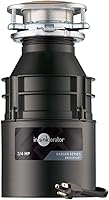
Choose 1/3 HP for light, occasional cleanup. The InSinkErator Badger 1 with Power Cord suits a kitchen where most scraps already go into the trash or compost.
It has single-stage grinding and galvanized steel grind components. Its Quick Lock mount supports replacement of an existing InSinkErator disposal, though you should still check mounting and plumbing compatibility.
InSinkErator backs this model with a 1-year limited service warranty. That shorter coverage is worth weighing if you're also considering the Badger 5.
Skip the Badger 1 if the disposal will be part of frequent meal preparation. Choose it for its light-duty role, rather than assuming a smaller household always needs the smallest motor.
Is 1/2 HP enough for routine kitchen cleanup?
The Badger 5 is the starting choice for routine scraps and a basic replacement. It suits cooks who feed small portions and don't need the extra grinding features of the Power Series.
Its Dura-Drive induction motor works with galvanized steel grind components. The compact body measures 11.5 in high and 6.31 in wide, making it worth comparing when cabinet space is limited.
The Badger 5 fits existing InSinkErator hardware, subject to compatibility checks. InSinkErator provides a 3-year in-home service warranty.
Skip it if two-stage grinding and a removable baffle are priorities. Our 1/2 HP vs 3/4 HP comparison explains the next step.
When should you choose 3/4 HP?
Choose the Power Series 3/4 HP for frequent cooking when you also want two-stage grinding. It offers a clear feature step beyond the basic Badger options.
InSinkErator says its MultiGrind system grinds scraps finer to help prevent clogs compared with its Standard Series. The removable baffle also gives you easier access for cleaning.
InSinkErator backs this model with a 6-year limited service warranty and describes its sound level as reduced compared with standard disposals. That doesn't make it silent, so consider sound separately from horsepower.
Skip this upgrade if you rarely grind scraps or your cabinet can't accommodate the wider body. For other options at this power level, see our 3/4 HP garbage disposal guide.
Who should choose a 1 HP garbage disposal?
Choose the Power Series 1 HP if frequent food preparation gives you a reason to want extra motor power. It's the strongest motor among these four choices, but it isn't a requirement for every busy household.
Like the 3/4 HP version, it has two-stage grinding, stainless steel grind components, and a removable baffle. InSinkErator also describes reduced sound compared with standard disposals.
The main reason to choose this model over its sibling is the motor upgrade. Both share the same stated body dimensions, so stepping down between these two won't save cabinet space.
Skip it for occasional plate scraps or if the 3/4 HP model already matches your cooking habits. Extra power doesn't remove the need to feed carefully or keep unsuitable waste out.
Does household size determine disposal size?
Cooking habits matter more than the number of people at home. Two people preparing meals from scratch can create more sink cleanup than a family that rarely cooks.
For a family of 4, begin with the routine-use recommendation and adjust for actual use. Frequent vegetable prep and several meals a day make the higher-power options more relevant.
Also consider where your scraps go now. If you compost most food waste, a disposal may only need to handle the small bits left after scraping dishes.
For a septic system, adding horsepower doesn't settle whether a disposal is suitable. Read whether a garbage disposal works with a septic tank before adding food waste to your system.
How do you check if a disposal will fit under the sink?
Measure the cabinet and drain layout before ordering. A unit can fit inside the cabinet yet leave too little room for its plumbing or service access.
Both Power Series models here measure 12 in high and 8.25 in wide. Use those body dimensions as a starting point, then check the installation drawing for connection positions.
Check these areas:
- Height: Measure below the sink drain, accounting for the mount and the cabinet floor.
- Width: Look for nearby pipes, filters, bins, shelves, and hoses.
- Drain route: Compare the disposal outlet position with the wall drain and trap.
- Access: Leave room to reach connections, the reset control, and the jam-clearing point.
The discharge needs a suitable route through the trap to the wall drain. A new outlet position may require plumbing changes even when the disposal itself fits.
Avoid choosing from the old unit's horsepower alone. Our garbage disposal replacement guide covers the connections to inspect before removing it.
What electrical setup and feed type do you need?
Match the disposal to your existing power connection and preferred way of operating it. These choices are separate from motor size.
Both Badger models here include a factory-installed cord. Both Power Series models include an EZ Connect Hardwire Adapter, while their EZ Connect power cords are sold separately.
Check whether the current unit plugs into a switched outlet or is hardwired. Our garbage disposal power cord guide explains the difference so you can plan the right connection.
All four models are continuous feed, meaning they run while switched on. Batch-feed models use a stopper to activate operation, which changes how you load and run them.
If that operating style matters to you, compare batch feed vs continuous feed garbage disposals before choosing a motor size.
During installation, remove the dishwasher inlet plug only if you're connecting a dishwasher drain hose, following the unit's instructions. Disconnect power before installation or service, and get qualified help for electrical or plumbing work you can't safely complete.
How should you use and care for any disposal size?
Feed small portions with cold water, and scrape bulky waste into the trash or compost first. Good habits matter even with a stronger motor.
Start the water before feeding scraps, then let the disposal finish before adding more. Keep water running afterward for the time directed in the manual to help carry ground waste through the drain.
Avoid these common mistakes:
- Pouring grease or oil down the sink, where it can build up in pipes.
- Packing the chamber with a whole meal's scraps before switching on.
- Feeding fibrous waste, large amounts of starchy food, or hard items against the unit's instructions.
- Assuming more horsepower will fix slow drainage or an existing blockage.
Clean the splash guard and accessible surfaces with power disconnected. Our garbage disposal cleaning guide explains how to address residue and odors.
Never reach inside the chamber. If the motor hums without grinding, switch it off rather than repeatedly trying to run it, then follow the manual's jam-clearing steps.
Which garbage disposal size should you choose?
Choose the garbage disposal size you need by matching your weekly cleanup, then confirming fit. Use these decision rules to make the final choice:
- Badger 1: Occasional scraps, with most food waste going elsewhere.
- Badger 5: Routine cleanup and a basic corded replacement.
- Power Series 3/4 HP: Frequent cooking, two-stage grinding, and easier baffle cleaning.
- Power Series 1 HP: Frequent preparation where you want the extra motor power over its sibling.
Before ordering, confirm the drain route, mounting compatibility, and power connection. Use our complete garbage disposal buying guide to compare other models once you've settled on the right size.
Frequently asked questions
What size garbage disposal is best for a family of 4?
Start with 1/2 HP for a family of 4 that grinds small amounts of everyday scraps. Choose 3/4 HP if you cook frequently and want the two-stage grinding offered by the Power Series model here.
Cooking habits matter more than head count, and both choices still require careful feeding.
Is 1/2 HP enough for a garbage disposal?
A 1/2 HP disposal is enough for routine cleanup when you feed small amounts of suitable scraps with cold water. It's a sensible choice if you scrape most food into the trash or compost first.
Consider a higher-powered model for frequent meal preparation, rather than using extra power to grind larger loads.
Is a 3/4 HP garbage disposal worth it?
A 3/4 HP disposal is worth considering for frequent cooking, especially when the upgrade also adds grinding features you want. The Power Series model here adds two-stage grinding and a removable baffle.
Occasional users have less reason to upgrade, so weigh those features against cabinet fit and connection needs.
Does a bigger garbage disposal need more space?
A higher-horsepower disposal doesn't always need more space. The two Power Series models here have different motor sizes but the same body dimensions.
Measure the cabinet and drain connection, then allow room for wiring, hoses, and service access.
Motor power alone won't tell you whether a unit fits.